
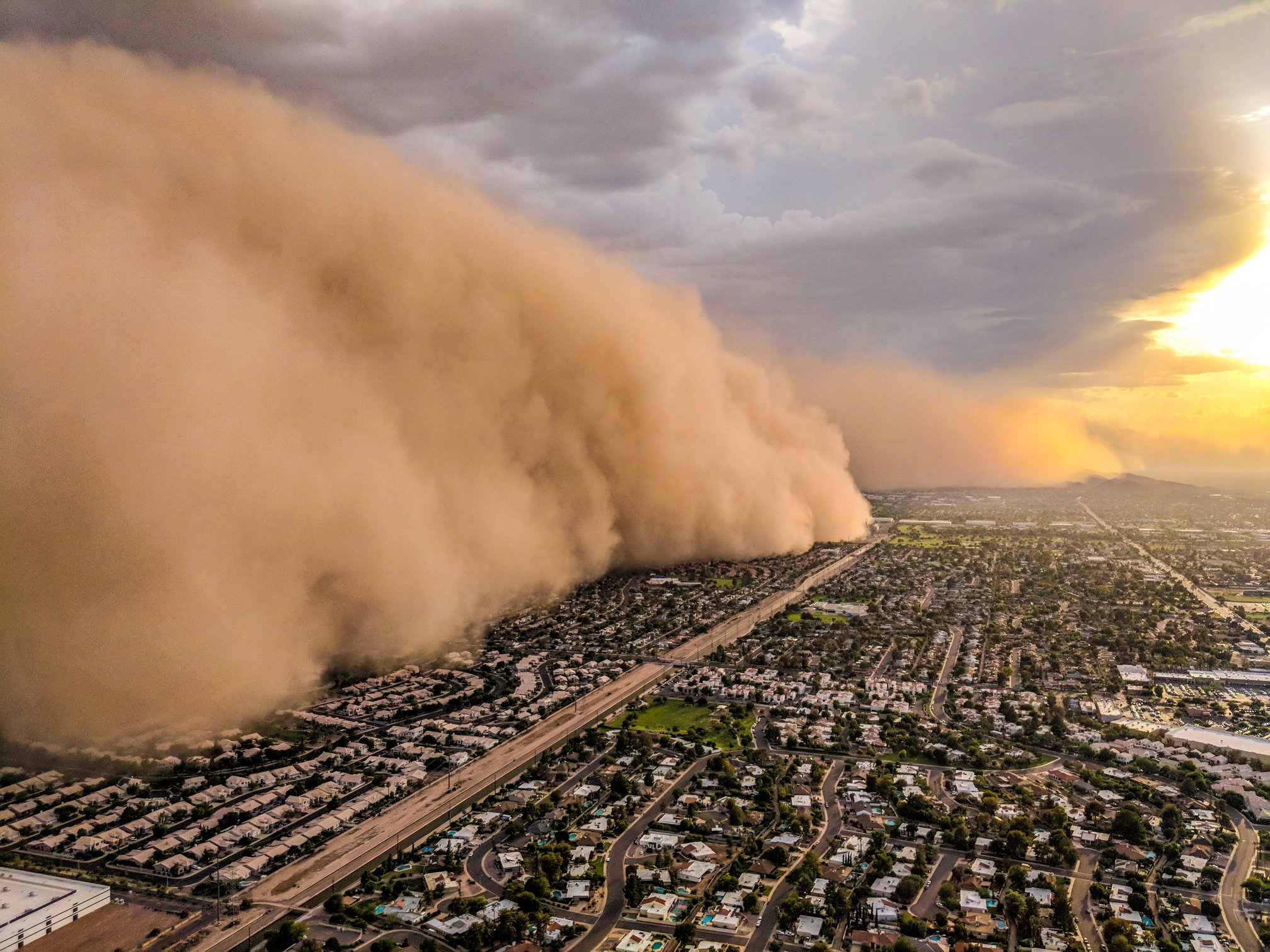
Arizona Weather Chaos: On August 25, 2025, Phoenix, Arizona, faced a dramatic one-two punch from mother nature. A massive haboob, or dust storm, descended upon the city, rapidly followed by intense monsoon flooding, particularly impacting Tempe. The National Weather Service (NWS) had issued severe thunderstorm and flash flood warnings for parts of the East Valley. Cleanup efforts are underway as communities grapple with the aftermath of this intense weather event.
Dust Storm Descends
The colossal dust storm originated near Casa Grande and Eloy around 4 p.m. MST, according to initial reports. By 6 p.m., the “towering wall of dust,” as described by multiple eyewitness accounts, had engulfed Phoenix. Visibility plummeted to near zero, creating extremely dangerous driving conditions. The Arizona Department of Transportation (ADOT) issued urgent advice, urging drivers to “Pull Aside, Stay Alive” by pulling off the road, turning off vehicle lights, and waiting for the storm to pass.
Airport Impact
Phoenix Sky Harbor International Airport was significantly affected. Wind gusts reached up to 70 mph as the haboob swept through, leading to ground stops for all flights. According to news reports, some airport facilities experienced leaking due to the high winds and heavy rain that accompanied the storm.
Monsoon Flooding Follows
Almost immediately following the dust storm, the same weather system unleashed heavy rain and thunderstorms across the region. This triggered flash flood warnings. Tempe bore the brunt of the flooding, with significant impacts reported along U.S. 60 near McClintock Drive and in a neighborhood near Loop 101 and Southern Avenue. Some areas received up to 2.5 inches of rain, exacerbating the already challenging conditions.
Power Outages and Disruption
The combined impact of the dust storm and flooding caused widespread chaos and disruption. Thousands of utility customers, primarily in Maricopa County, were left without power. The powerful storms downed trees and power lines, contributing to the outages. The Gilbert Police Department reported numerous knocked-down trees and traffic light outages, advising residents to avoid travel until crews could clear the debris and restore essential services.
Cleanup and Recovery
Cleanup efforts are now underway across affected communities. FOX 10 Phoenix Reporter Kenzie Beach provided updates from Tempe, detailing the ongoing work to clear debris and restore infrastructure. The flash flood warning remained in effect for parts of Tempe until late Wednesday evening, highlighting the continued risk and the need for caution.
The Science Behind the Storm
Haboobs are a common phenomenon in Arizona during the monsoon season. They are caused by powerful outflow winds from collapsing thunderstorms. These winds lift vast amounts of loose desert soil into the air, creating the towering walls of dust that characterize these storms. The intensity of the August 25th storm was particularly notable, highlighting the unpredictable nature of Arizona’s monsoon season. The News.Az reports that similar weather patterns are expected to continue throughout the monsoon season.
Lessons Learned from Arizona’s Flash Flooding
The events of August 25, 2025, serve as a critical reminder of the power of nature and the importance of preparedness. The Arizona Department of Transportation’s (ADOT) “Pull Aside, Stay Alive” campaign proved vital, emphasizing the need for drivers to take immediate action when faced with low-visibility conditions. Furthermore, the National Weather Service’s (NWS) warnings allowed residents to prepare for potential flooding, though the rapid onset of the storm highlighted the challenges of predicting and responding to such events.
Community Resilience
Despite the challenges, the response from the community and local authorities has been commendable. Emergency crews worked tirelessly to clear debris, restore power, and assist those affected by the storm. The resilience of the people of Phoenix and Tempe was evident as they came together to support each other during this difficult time. The Scottsdale Independent – YourValley.net reported on the outpouring of support from neighboring communities.
Future Preparedness
Moving forward, it is crucial to enhance preparedness measures to mitigate the impact of future dust storms and flash floods. This includes investing in infrastructure improvements, such as improved drainage systems and more resilient power grids. It also requires ongoing public education campaigns to raise awareness about the risks associated with monsoon season and to provide guidance on how to stay safe during severe weather events. According to 12News, local municipalities are reviewing their emergency response plans to better address similar events in the future.
The August 25, 2025, dust storm and flash floods in Phoenix and Tempe underscored the region’s vulnerability to extreme weather. The swift response from emergency services and the community’s resilience provided a testament to the strength. This event emphasized the need for continuous improvement in preparedness and infrastructure to safeguard against future weather-related challenges.


:max_bytes(150000):strip_icc()/ew1509_2186328197231908-2000-6106e12772f04897a11283f38ec08254.jpg "Unprecedented Demand: ‘Dawson’s Creek’ Broadway Reunion Sells Out in 12 Minutes")
