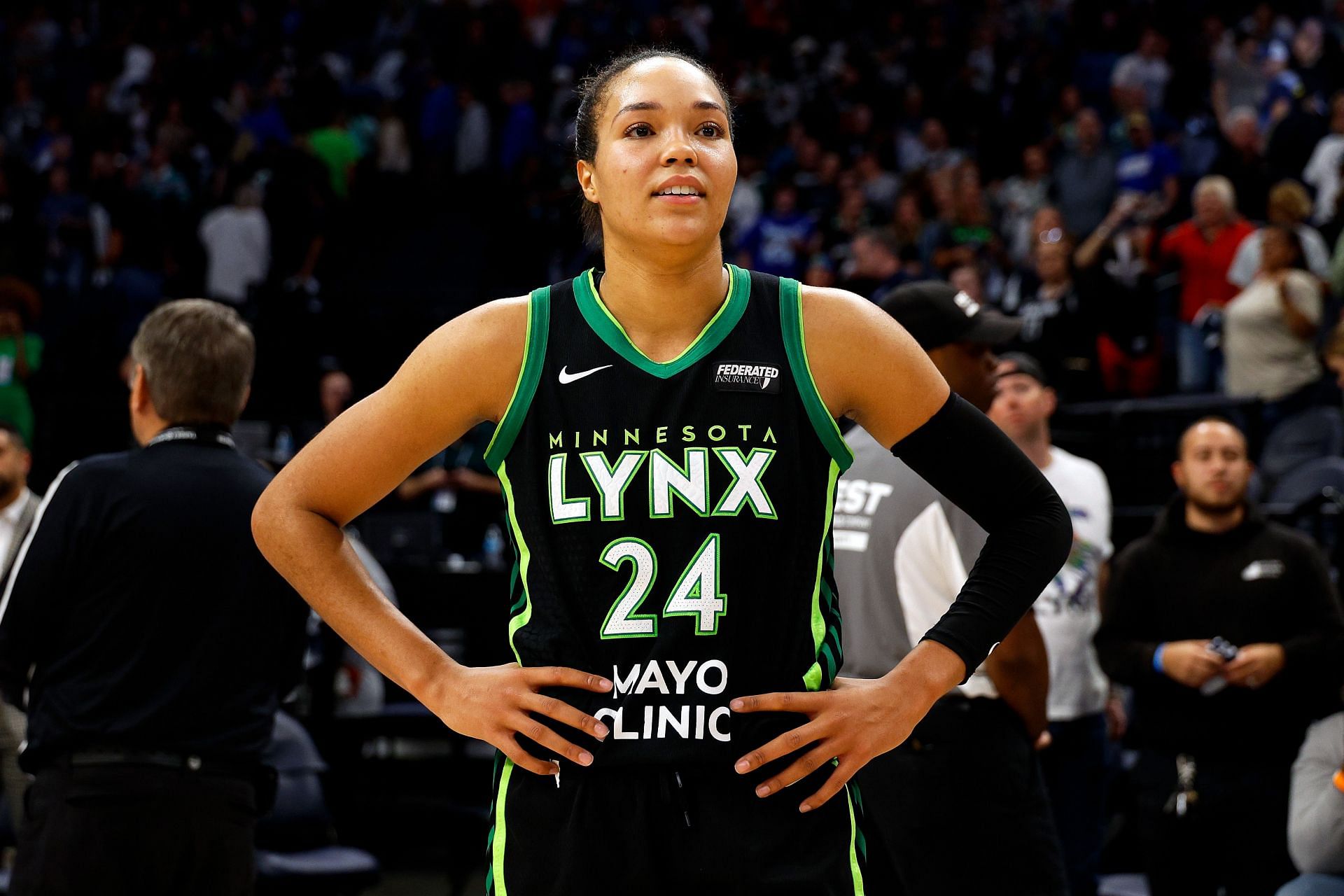
The Minnesota Lynx faced a significant setback as they prepared for a critical Game 4 against the Phoenix Mercury. Star forward Napheesa Collier was ruled out due to an ankle injury, casting a shadow over the Lynx’s chances in the must-win game. This absence posed a major challenge for the team, requiring other players to step up and fill the void left by Collier’s scoring and defensive presence.
Collier’s injury occurred at an unfortunate time, with the Lynx fighting to stay alive in the playoff series. Her contributions throughout the season had been instrumental to the team’s success, making her absence all the more impactful. The team needed to adjust their strategy and rely on their depth to overcome this obstacle.
Impact of Collier’s Absence
Offensive Adjustments
Napheesa Collier’s absence necessitated significant offensive adjustments for the Lynx. Collier had been a primary scoring option, consistently delivering points and creating opportunities for her teammates. Without her, the Lynx needed to find alternative ways to generate offense and distribute the scoring load more evenly.
One key adjustment involved increased reliance on other key players such as Kayla McBride and Diamond Miller. These players needed to elevate their scoring output and take on more responsibility in creating shots. The team also focused on improved ball movement and offensive execution to compensate for the loss of Collier’s individual scoring ability.
The Lynx coaching staff implemented new offensive sets and plays designed to exploit the Mercury’s defensive weaknesses and create open looks for different players. This strategic shift aimed to keep the offense dynamic and unpredictable, preventing the Mercury from focusing solely on shutting down one or two key scorers.
Defensive Strategy
Collier’s defensive prowess was another significant loss for the Lynx. Her ability to guard multiple positions, disrupt passing lanes, and protect the rim made her a crucial component of the team’s defensive strategy. Without her, the Lynx needed to shore up their defense through improved communication, rotations, and collective effort.
The Lynx coaching staff emphasized the importance of team defense, requiring every player to be active and engaged on the defensive end. This involved increased attention to detail in areas such as pick-and-roll coverage, help-side defense, and rebounding. Players were also tasked with taking on more individual defensive responsibility, stepping up to guard key Mercury players and limit their scoring opportunities.
Additionally, the Lynx explored different defensive lineups and rotations to find the most effective combinations to contain the Mercury’s offensive threats. This involved experimenting with different player pairings and adjusting the defensive scheme based on the flow of the game. The goal was to create a cohesive and resilient defense that could withstand the Mercury’s offensive pressure.
Leadership and Morale
Beyond her on-court contributions, Collier’s absence also impacted the team’s leadership and morale. As a respected veteran and key leader, Collier provided valuable guidance and support to her teammates. Her absence left a void in the locker room, requiring other players to step up and fill the leadership gap.
Experienced players such as Sylvia Fowles and Kayla McBride took on increased leadership roles, providing encouragement, direction, and motivation to the team. These players emphasized the importance of staying focused, maintaining a positive attitude, and playing with confidence despite the adversity. The coaching staff also played a crucial role in reinforcing the team’s belief in their ability to compete and win, despite the absence of their star player.
The Lynx focused on maintaining a strong team culture and fostering a sense of unity and resilience. This involved open communication, mutual support, and a collective commitment to overcoming challenges. The team emphasized the importance of playing for each other and leaving everything on the court, regardless of the circumstances.
Napheesa Collier’s absence presented a significant challenge for the Minnesota Lynx as they prepared for a crucial Game 4 against the Phoenix Mercury. The team needed to make significant adjustments on both ends of the court to compensate for her absence.
Mercury’s Perspective
Exploiting Collier’s Absence
From the Phoenix Mercury’s perspective, Napheesa Collier’s absence presented a significant opportunity. Collier’s defensive versatility and scoring ability were key factors that the Mercury needed to account for in their game plan. Without her on the court, the Mercury could exploit mismatches and target weaker defenders.
The Mercury’s offensive strategy focused on isolating their key scorers against favorable matchups and attacking the basket aggressively. This involved setting screens, creating driving lanes, and exploiting the Lynx’s defensive rotations. The Mercury also emphasized the importance of spacing the floor and knocking down open shots to stretch the Lynx’s defense and create scoring opportunities.
On the defensive end, the Mercury aimed to limit the Lynx’s scoring options and disrupt their offensive flow. This involved applying pressure on the perimeter, contesting shots, and denying easy baskets. The Mercury also focused on controlling the boards and limiting the Lynx’s second-chance opportunities.
Maintaining Focus and Intensity
Despite Collier’s absence, the Mercury recognized the importance of maintaining focus and intensity throughout the game. They understood that the Lynx were a resilient team capable of competing at a high level, regardless of who was on the court. The Mercury needed to avoid complacency and stay disciplined in their execution.
The Mercury’s coaching staff emphasized the importance of playing with energy, passion, and determination. They encouraged the players to stay aggressive, communicate effectively, and support each other on both ends of the court. The goal was to create a cohesive and focused team that could withstand the Lynx’s challenges and secure the victory.
Additionally, the Mercury focused on controlling the tempo of the game and dictating the pace of play. This involved pushing the ball in transition, running their offensive sets efficiently, and executing their defensive strategies effectively. The Mercury aimed to wear down the Lynx over the course of the game and capitalize on their fatigue and frustration.
Series Implications
The outcome of Game 4 had significant implications for the series. A win for the Mercury would give them a commanding lead and put them in a favorable position to advance to the next round. Conversely, a win for the Lynx would even the series and shift the momentum in their favor.
Both teams understood the importance of the game and were prepared to leave everything on the court. The intensity and physicality were expected to be high, with both teams battling for every possession. The game was likely to be decided by key plays, timely shots, and defensive stops.
The absence of Napheesa Collier added an extra layer of intrigue to the game, as both teams needed to adjust their strategies and game plans accordingly. The Mercury aimed to exploit her absence and capitalize on their opportunities, while the Lynx needed to overcome this adversity and find a way to compete and win.
Lynx’s Season Performance
Regular Season Success
The Minnesota Lynx had a strong regular season, showcasing their talent and potential as a contender in the WNBA. Led by Napheesa Collier, the Lynx displayed a balanced attack and a solid defense, earning them a high seed in the playoffs. Their regular-season performance demonstrated their ability to compete against the league’s top teams and establish themselves as a force to be reckoned with.
Throughout the season, the Lynx showcased their depth and versatility, with multiple players contributing on both ends of the court. Their offensive execution was efficient, with a focus on ball movement, spacing, and creating open looks for their shooters. Defensively, they were disciplined and aggressive, forcing turnovers and limiting opponents’ scoring opportunities.
The Lynx’s success was also attributed to their strong team chemistry and coaching staff. The players developed a close bond and played with a sense of unity and purpose. The coaching staff implemented effective strategies and made adjustments as needed, guiding the team through challenges and maximizing their potential.
Playoff Expectations
Entering the playoffs, the Lynx had high expectations and aspirations. They were considered one of the top contenders for the WNBA championship, with many analysts predicting a deep playoff run. The team was confident in their ability to compete against the league’s best and believed they had the talent and experience to win it all.
However, the playoffs presented a new set of challenges, with increased intensity, physicality, and scrutiny. The Lynx needed to elevate their game and perform at their best to overcome these challenges and achieve their goals. They understood that every game mattered and that they needed to approach each contest with focus, determination, and a sense of urgency.
The absence of Napheesa Collier added an unexpected twist to their playoff journey, forcing the team to adjust their expectations and strategies. While Collier’s absence was a significant blow, the Lynx remained determined to compete and fight for every victory. They believed in their ability to overcome adversity and prove their worth as a team.
Looking Ahead
Despite the setback of Collier’s injury, the Lynx remained optimistic about their future and their ability to compete for championships in the years to come. The team had a solid foundation of talented players, a strong coaching staff, and a supportive ownership group. They were committed to building a sustainable winning culture and establishing themselves as a perennial contender in the WNBA.
The Lynx planned to continue developing their young players, refining their strategies, and strengthening their team chemistry. They also aimed to address any weaknesses or areas for improvement through offseason training, player acquisitions, and strategic planning. The goal was to build a team that could consistently compete at a high level and contend for championships year after year.
The Lynx organization was dedicated to providing the resources and support necessary for the team to succeed. This included investing in player development, upgrading facilities, and fostering a positive and supportive environment. The Lynx were committed to creating a winning culture that attracted top talent and inspired players to perform at their best.
“We have to find a way to step up and fill the void left by Napheesa’s absence,” said Lynx coach Cheryl Reeve. “It’s going to take a collective effort from everyone on the team.”
Key Takeaways
- Napheesa Collier’s absence due to an ankle injury significantly impacted the Lynx’s Game 4 strategy against the Mercury.
- The Lynx needed to make offensive and defensive adjustments to compensate for Collier’s scoring and defensive presence.
- The Mercury aimed to exploit Collier’s absence by targeting weaker defenders and creating favorable matchups.
- The Lynx focused on maintaining team morale and unity despite the adversity.
- The outcome of Game 4 had significant implications for the series, with both teams battling for a crucial victory.
FAQ: Napheesa Collier’s Injury and Lynx’s Strategy
What was the specific injury that sidelined Napheesa Collier?
Napheesa Collier was ruled out for Game 4 due to an ankle injury. The severity and specific details of the injury were not fully disclosed, but it was enough to prevent her from playing in the crucial game.
How did the Lynx adjust their offense in Collier’s absence?
The Lynx adjusted their offense by increasing the roles of other key players like Kayla McBride and Diamond Miller. They also focused on improved ball movement and creating open looks for different players to compensate for Collier’s scoring.
What defensive strategies did the Lynx employ to mitigate Collier’s absence?
The Lynx emphasized team defense, requiring every player to be active and engaged on the defensive end. This involved improved communication, rotations, and collective effort to contain the Mercury’s offensive threats.
How did Collier’s absence affect the team’s leadership and morale?
Collier’s absence created a leadership void, which experienced players like Sylvia Fowles and Kayla McBride stepped up to fill. The team focused on maintaining a positive attitude and playing with confidence despite the adversity.
What were the Mercury’s key strategies to exploit Collier’s absence?
The Mercury aimed to exploit Collier’s absence by isolating their key scorers against favorable matchups and attacking the basket aggressively. They also focused on limiting the Lynx’s scoring options and disrupting their offensive flow.
What is the outlook for the Lynx in the remainder of the season?
Despite the setback of Collier’s injury, the Lynx remained optimistic about their future and their ability to compete for championships. They were committed to building a sustainable winning culture and establishing themselves as a perennial contender in the WNBA. The team’s ability to adapt and perform without Collier will be critical as the season progresses. Related coverage provides further insights into the team’s challenges.
In conclusion, the Minnesota Lynx faced a significant challenge with Napheesa Collier’s absence in Game 4, requiring strategic adjustments and a collective effort from the team. While the Mercury aimed to capitalize on this opportunity, the Lynx focused on maintaining morale and finding ways to compete effectively. As the season progresses, the Lynx’s ability to adapt and overcome adversity will be crucial in their pursuit of a championship. Explore the team’s performance and future prospects to stay informed about their journey.